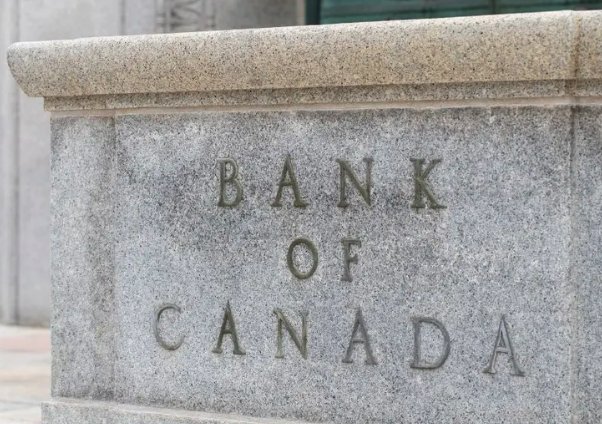
The shift has begun. Why Canada needs creative, stable financial infrastructure, built at home.
Interest-rate volatility, the modernization of payments, and a wave of clearer regulation are changing how Canadians interact with money. That is not a threat to manage. It is an opening, and the constructive question is what gets built into the gap, and who builds it.
For most of the last decade, "the future of money" was a conversation happening somewhere else, in central-bank research papers, in offshore crypto markets, in Silicon Valley pitch decks. In 2025 it stopped being somewhere else. The Bank of Canada has been explicit that the financial system is entering a new era, payments are being modernized, and the rulebook around digital assets is being written in real time. The shift is no longer coming. It has begun.
The risk in a shift like this is not that it happens. It is that the benefits accrue narrowly, to the largest institutions and the fastest-moving foreign platforms, while ordinary Canadians get the downside, tighter credit, slower settlement, higher costs, without the upside. The purpose of this brief is to argue the opposite outcome is available, and to be precise about what it requires.
1 · What "creative finance" should, and should not, mean
"Creative finance" is a phrase that can mean almost anything, so it is worth pinning down. It does not mean a new speculative token, a clever yield product, or a workaround that routes around the regulated system. Those are exactly the things that have hurt people.
What it should mean is narrower and more durable: applying proven financial principles, full reserves, segregation of client funds, clear redemption, real audit, on top of modern infrastructure, so that money moves faster, costs less, and accounts for itself. Creativity in the engineering. Conservatism in the promises. When that combination is in place, ordinary things become possible that are difficult today:
- A business settles a payment in minutes instead of waiting days for funds to clear.
- A freelancer's income is split automatically across operating, tax, and savings buckets the moment it lands.
- A municipality distributes a program payment and can see, in real time, that every dollar reached its intended recipient.
None of that is theoretical. The components exist. What has been missing in Canada is infrastructure that assembles them under domestic oversight, rather than asking Canadians to trust a foreign platform or a black box.
2 · The landscape is genuinely opening
The most important development of 2025 is that Canadian regulators have moved from a posture of caution to one of structured engagement. The paths are no longer guesswork:
- FINTRAC supervision and enforcement have made the anti-money-laundering expectations for digital-asset businesses unambiguous, including, as 2025 showed, the consequences of ignoring them.
- OSFI has finalized capital and liquidity treatment for the crypto-asset exposures of banks and insurers, giving regulated institutions a real rulebook for participating.
- The CSA's staff guidance, including notices addressing value-referenced crypto assets and stablecoin-style instruments, has clarified how Canadian securities regulators view this category.
- The Retail Payment Activities Act brought the payment service providers in the middle of the system under Bank of Canada supervision.
- Alberta's financial innovation environment has created room to test regulated digital-finance products under supervision rather than in the dark.
Taken together, this is an invitation, conditional, supervised, and demanding, but a real one. It creates space for Canadian firms to build domestically governed infrastructure instead of ceding the category.
Money infrastructure is not neutral. Whoever builds and operates a country's settlement rails holds real influence over its economy, its data, and its resilience. If Canada does not build institution-grade digital settlement under Canadian oversight, the rails Canadians use will simply be built elsewhere, by entities with no Canadian mandate. Sovereignty here is not a slogan. It is an architecture decision.
3 · The role of stable, verifiable value
At the centre of any serious version of this is a simple instrument: digital value that holds its worth and can be verified. Not a speculative asset, and not a marketing promise, but units fully backed by safe, liquid reserves, cash and short-term government securities, held at regulated custodians, with reserve coverage published continuously and confirmed by independent attestation.
The discipline matters more than the design flourishes. A credible instrument is one where anyone, customer, auditor, regulator, journalist, can check that obligations are covered, where client funds are segregated and that segregation is enforced by the system rather than merely promised, and where redemption is clear and honoured. Transparent backing, live attestation, Canadian supervision. The instrument should be boring. The infrastructure carrying it can be sophisticated.
Every major shift in money creates an opening. The question is always the same: who gets to build into it, and on whose terms?
4 · The moment to act, stated honestly
Shifts in monetary infrastructure are rare, and they are sticky, the rails a country adopts in a transitional decade tend to define the next several. That is the opportunity and the pressure at once. As the Bank of Canada modernizes policy and the regulators define the lanes, there is a window in which Canada can build financial infrastructure that serves Canadians and the institutions that already carry the country's regulatory burden, rather than importing whatever the rest of the world ships.
This is not a prediction that it will happen. It is an argument that it can, and that the conditions, for the first time, are aligned for it. KCS Capital exists to do the research and design work behind that infrastructure; 4orm Finance is being built, as a separately governed regulated entity, to operate it. Change is coming to Canadian finance. The constructive response is to build the bridge deliberately, under Canadian oversight, before someone else builds it for us.
Background & Sources
- Bank of Canada commentary on payments modernization and the evolving financial system, Bank of Canada.
- Retail Payment Activities Act and payment service provider supervision milestones, Bank of Canada, Retail Payments Supervision.
- Capital and liquidity treatment of crypto-asset exposures, OSFI guidance library.
- Canadian Securities Administrators staff guidance on value-referenced crypto assets, CSA notices.
- FINTRAC supervision and enforcement of money services businesses, FINTRAC.
This brief is thought-leadership commentary from KCS Capital and is provided for informational purposes only. It does not constitute investment, financial, legal, or tax advice, or an offer or solicitation to buy or sell any security or financial product. Regulatory descriptions reflect publicly reported developments and are not legal analysis. KCS Capital Inc. is an independent technology and research firm; 4orm Finance operates as a separate regulated entity with independent governance.